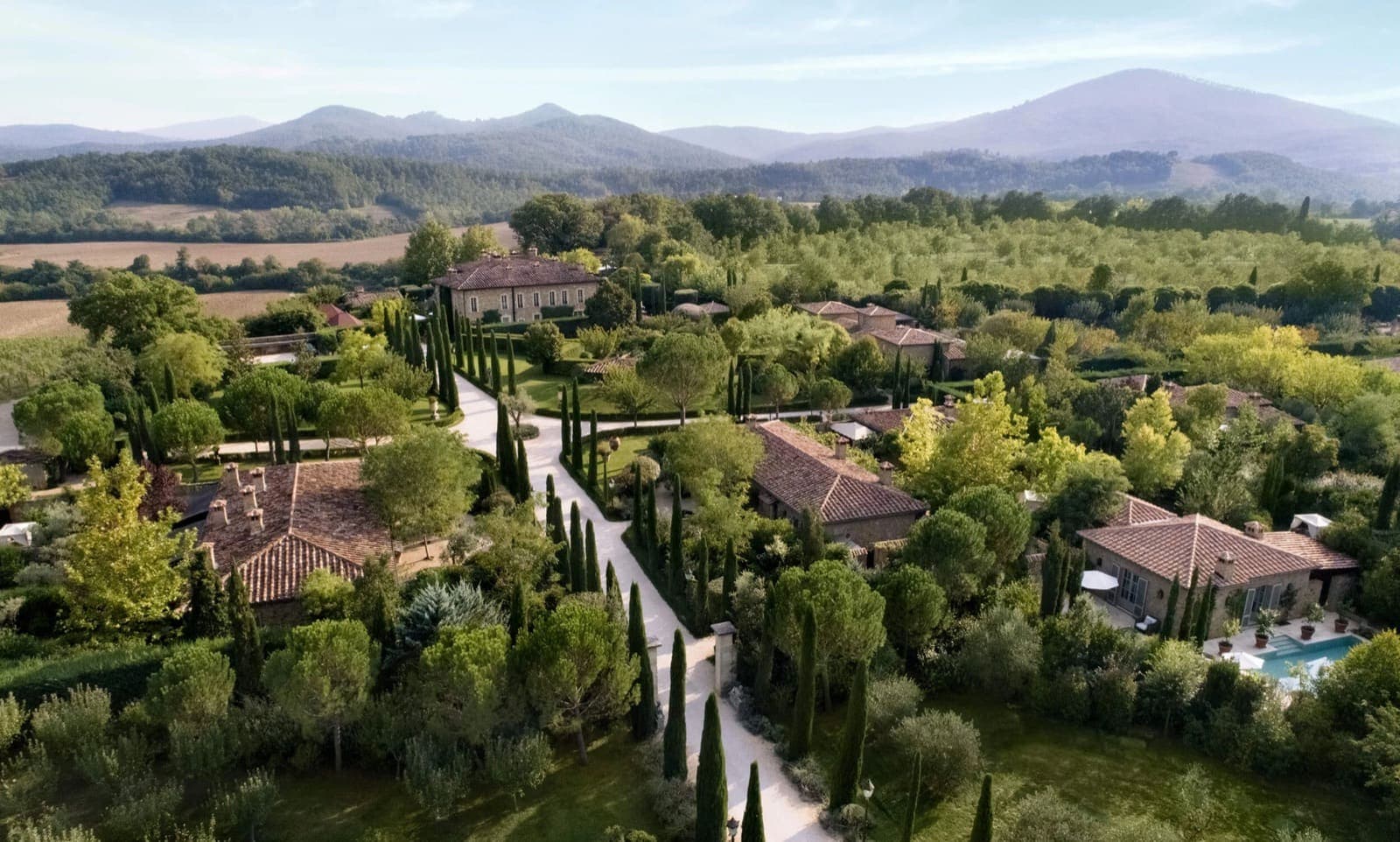
Tuscany in October
The hills turn gold, the olive harvest begins, and the crowds go home.
October is the connoisseur’s month in Tuscany: the olive harvest starting, white truffles arriving at the table, golden light on emptying hill towns, and the great country estates pricing the final weeks of their season well below summer peak. Right now our tracking shows October rates at Borgo Santo Pietro from $1,735/night — 69% below its typical peak.
See all hotels with October windows →
Tuscany runs on harvests, and by October the noisy one is over. The vendemmia crowds that fill September leave with the grapes, the tour buses thin out of the hill towns, and the light drops to the low golden angle the region was painted in. What arrives in their place is the quieter harvest: olives coming off the trees, and the first white truffles of the year reaching the tables around mid-month.
What October is actually like
The days are mild, around 66°F, and the landscape does its best work of the year: vines rusting red and gold, fresh-turned earth, morning fog in the valleys that burns off by ten. The wineries are still lively from the vendemmia but the tasting rooms have time for you now, and restaurants begin building menus around new oil and truffles rather than turning tables.
The hill towns give the clearest measure of the month. Places that queue in July, Siena, San Gimignano, Montepulciano, go back to being towns. You park where you like, eat where the locals eat, and hear church bells instead of tour groups.
What to know before you book
October is the season’s final act, and the calendar is the whole trick. The great country estates close for winter at the end of the month: Borgo Santo Pietro begins its winter pause from November 1 and does not reopen until spring. Rain risk also rises as the month deepens toward November, the region’s wettest month. Both point the same way: the first three weeks are the play.
The rates are the reward for reading the calendar right. Estates pricing the last weeks of their season, with summer demand gone and closure ahead, offer the same rooms, gardens and kitchens at some of the lowest prices of their year.
Where we’d stay
rates tracked daily · same roomThe honest answers
what we’d tell a friendWhen is the best time to visit Tuscany?
May, June and September are the classic months: the hills at their greenest in late spring, the vendemmia grape harvest in September, and peak pricing throughout. July is hot and busy, and August adds the Ferragosto holiday crowds to a parched landscape. October, the month this guide argues for, trades a few degrees of warmth for the olive harvest, the first white truffles, the year’s best light and the season’s lowest rates before the country estates close for winter.
Is October a good time to visit Tuscany?
Yes, with one note on timing. Days are mild at around 66°F, the light is the most photogenic of the year, the olive harvest is underway and white truffles reach menus from mid-month, all with the summer crowds gone. Rain becomes more likely as the month goes on, so the first three weeks are the safest window.
What is the weather like in Tuscany in October?
Mild and golden. Daytime highs sit around 66°F early in the month and ease toward 60°F by its end, with crisp evenings that call for a fireplace. Valley fog is common in the mornings and burns off by mid-morning. Rain grows more frequent late in the month as autumn deepens toward November, the region’s wettest month.
What closes in Tuscany in October?
The towns and cities stay open year round; it is the countryside that winds down. Many of the great country estates end their season at the close of October. Borgo Santo Pietro, for one, begins its winter pause from November 1 and reopens in spring. October is the season’s final act, which is exactly why its last weeks price the way they do.
How much do luxury hotels in Tuscany cost in October?
Based on our daily tracking of the same entry rooms: Borgo Santo Pietro from $1,735/night (typical peak $5,562). Rates are confirmed with the booking partner and move nightly.