Ryokan worth crossing the world for.
Japan's traditional inns: tatami, kaiseki and onsen, off the cherry-blossom and autumn-leaf peaks.
A ryokan is not a hotel with tatami on the floor. It is a room, a bath and two meals sold as one thing, usually priced per person, and its quiet months are the ones between Japan’s two great tourist waves.
kyoto · JP
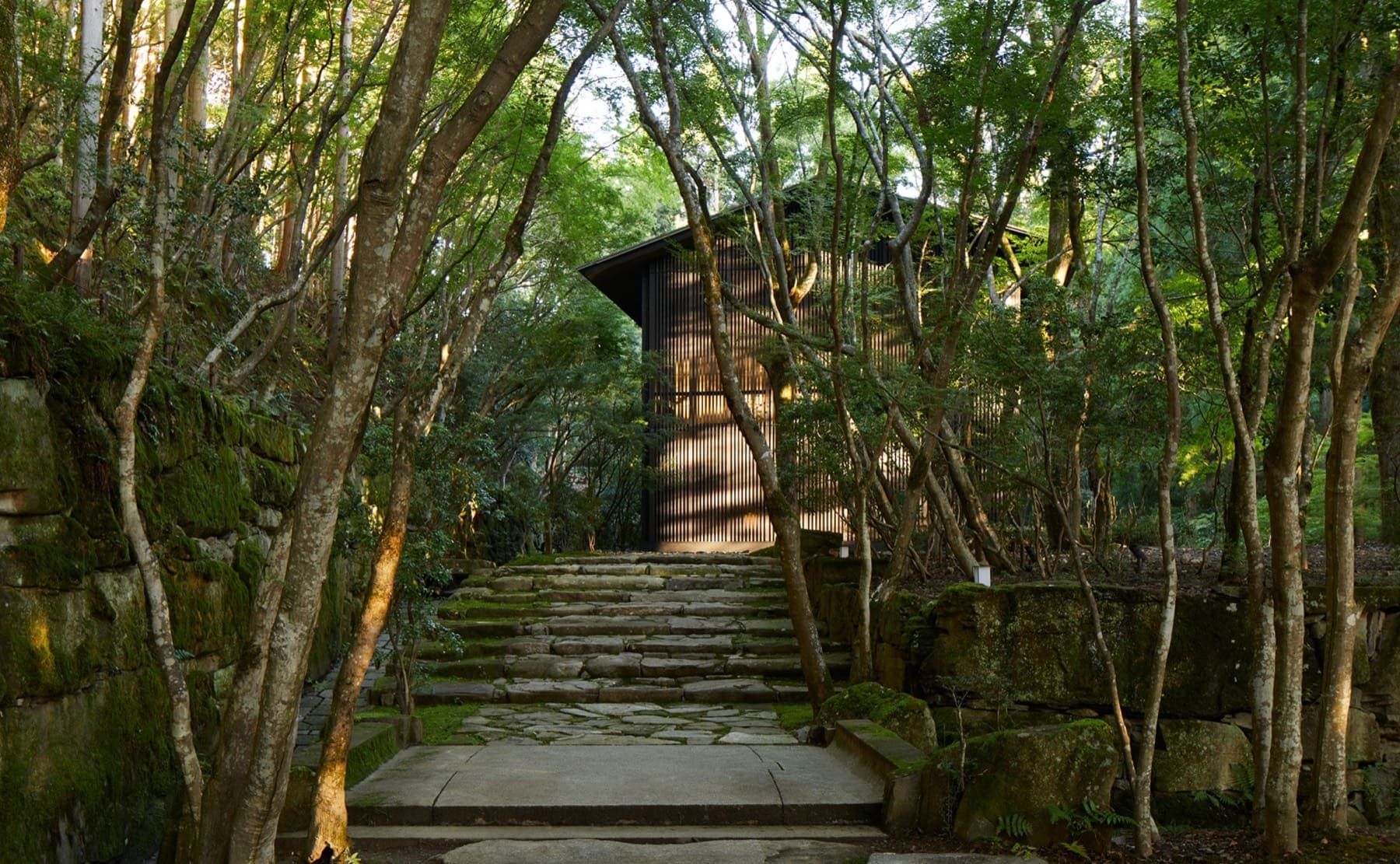
Aman Kyoto
Kerry Hill's final work, minimalist pavilions in a secret forest garden of moss and stone paths near Kinkaku-ji.
shuzenji · JP
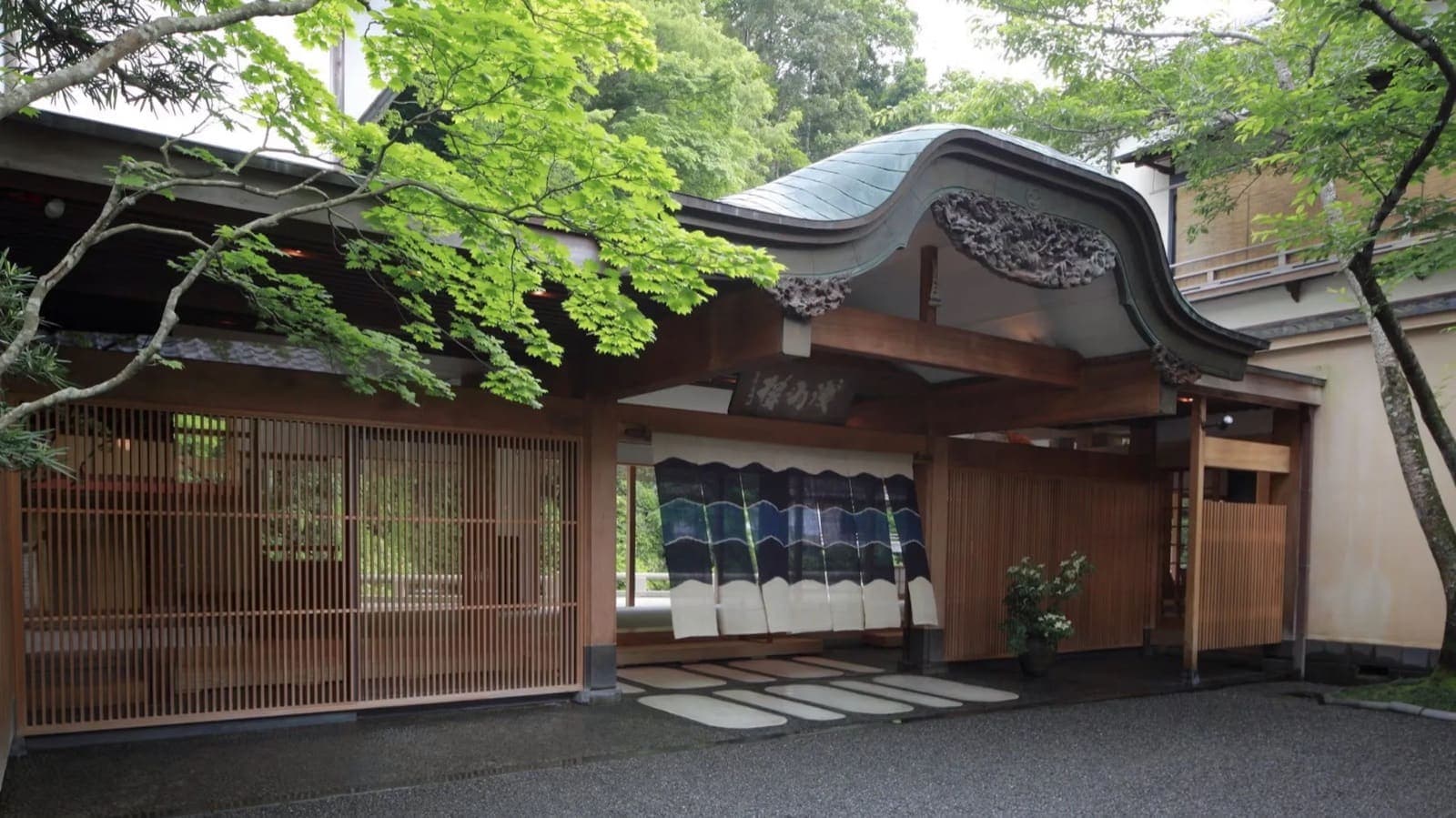
Asaba
Family-run ryokan founded in 1675 beside Shuzenji temple, known for its pond-side Noh stage and refined kaiseki cuisine.
Travel windows 25% to 60% below peak
seto inland sea · JP
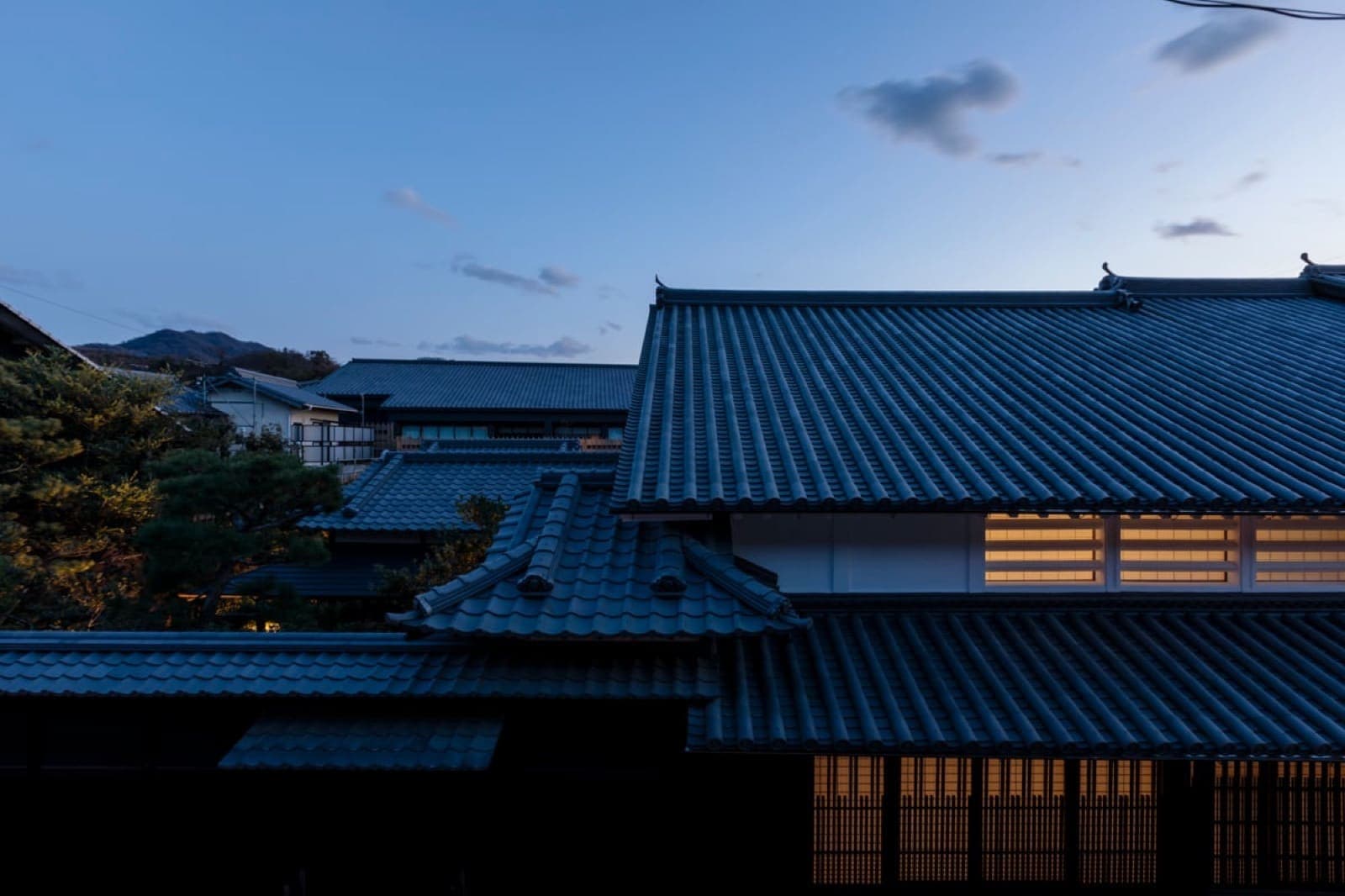
Azumi Setoda
Adrian Zecha's 140-year-old merchant house reborn as a modern ryokan on the Seto Inland Sea.
kaga · JP
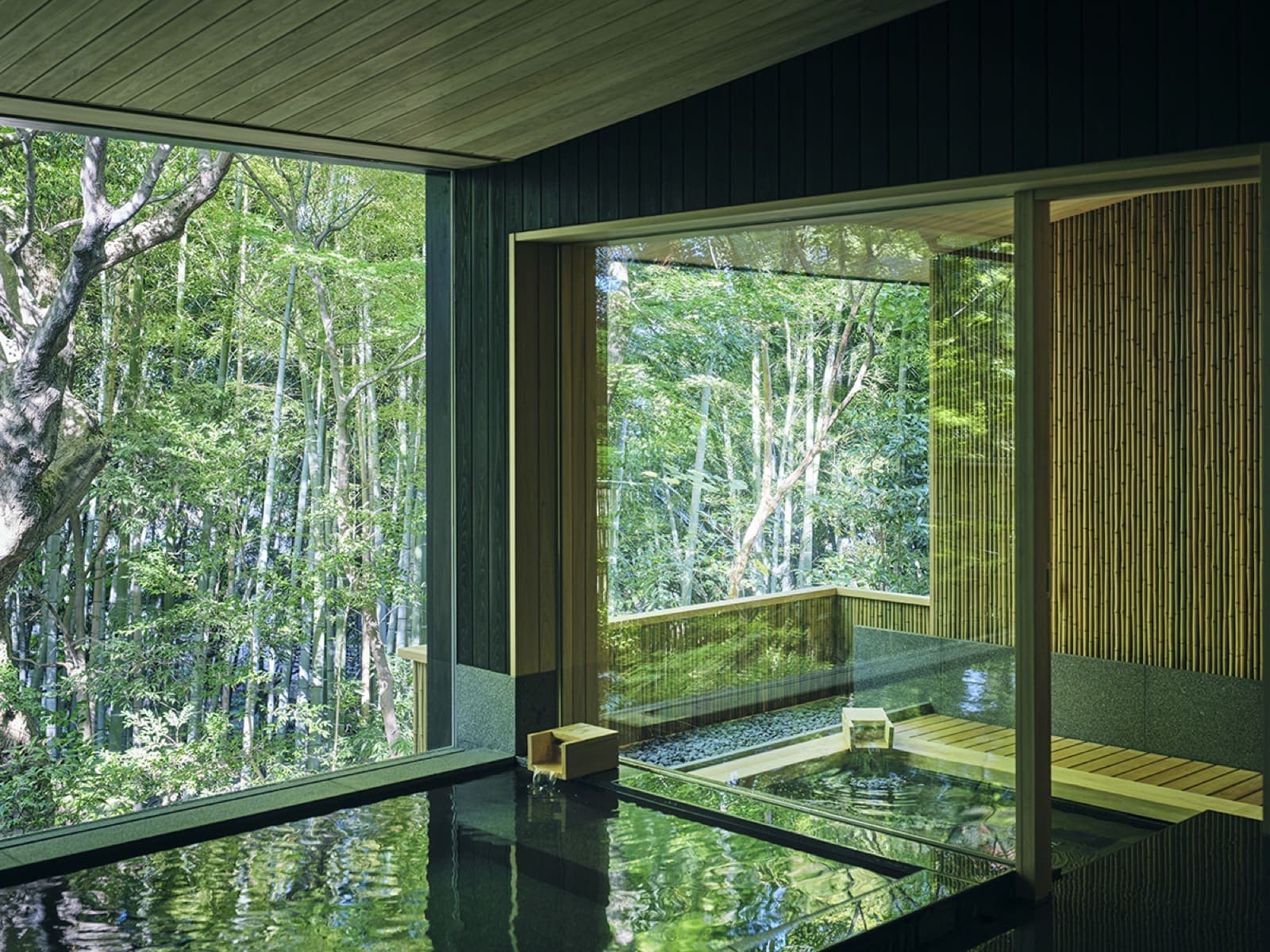
Beniya Mukayu
Contemporary 16-room onsen ryokan above Yamashiro hot springs, each room with private open-air bath overlooking a Japanese garden.
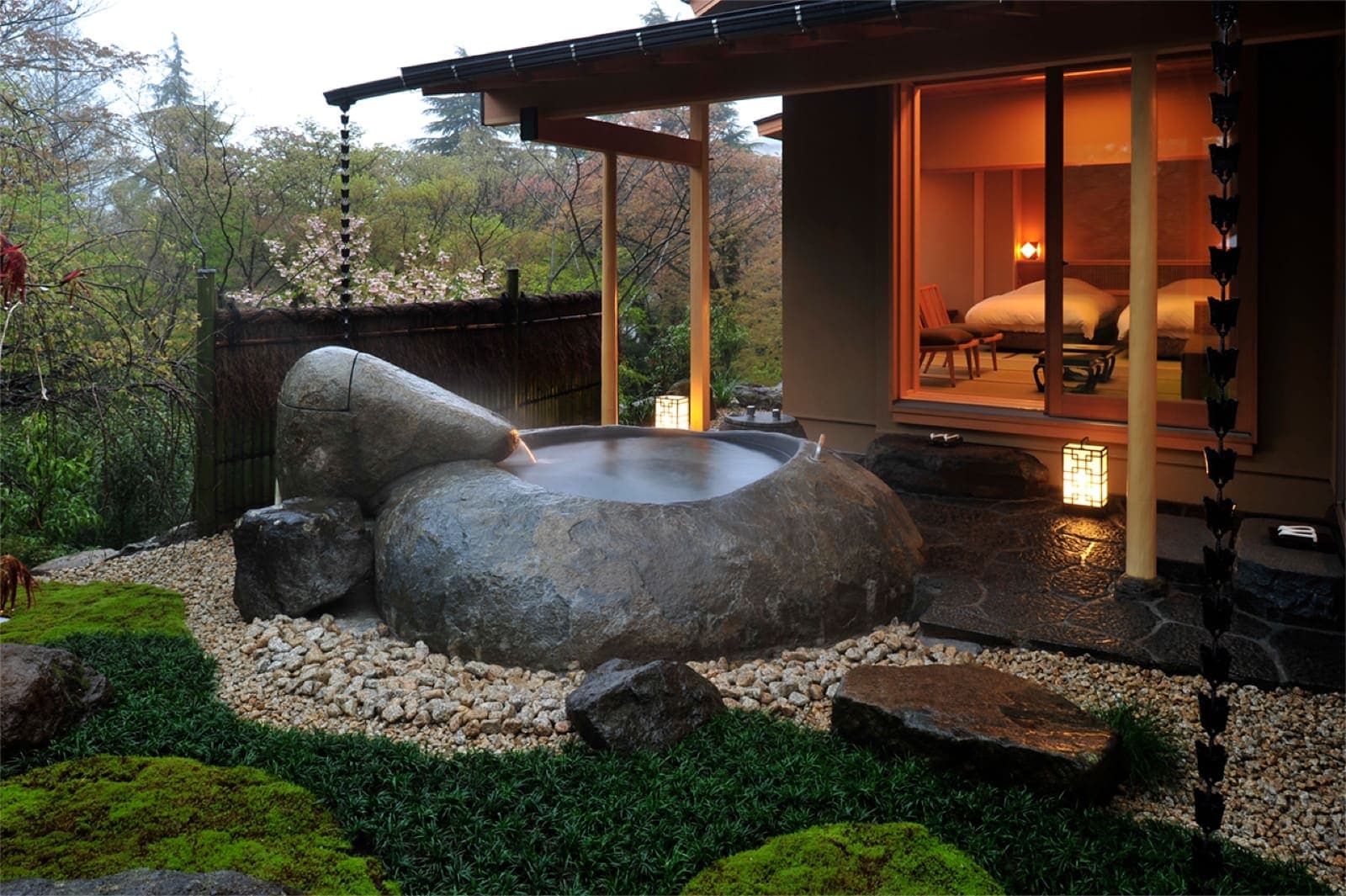
hakone · JP
Gora Kadan
Celebrated ryokan on former imperial summer villa grounds in Hakone, with onsen baths, kaiseki dining, and tatami suites.
kyoto · JP
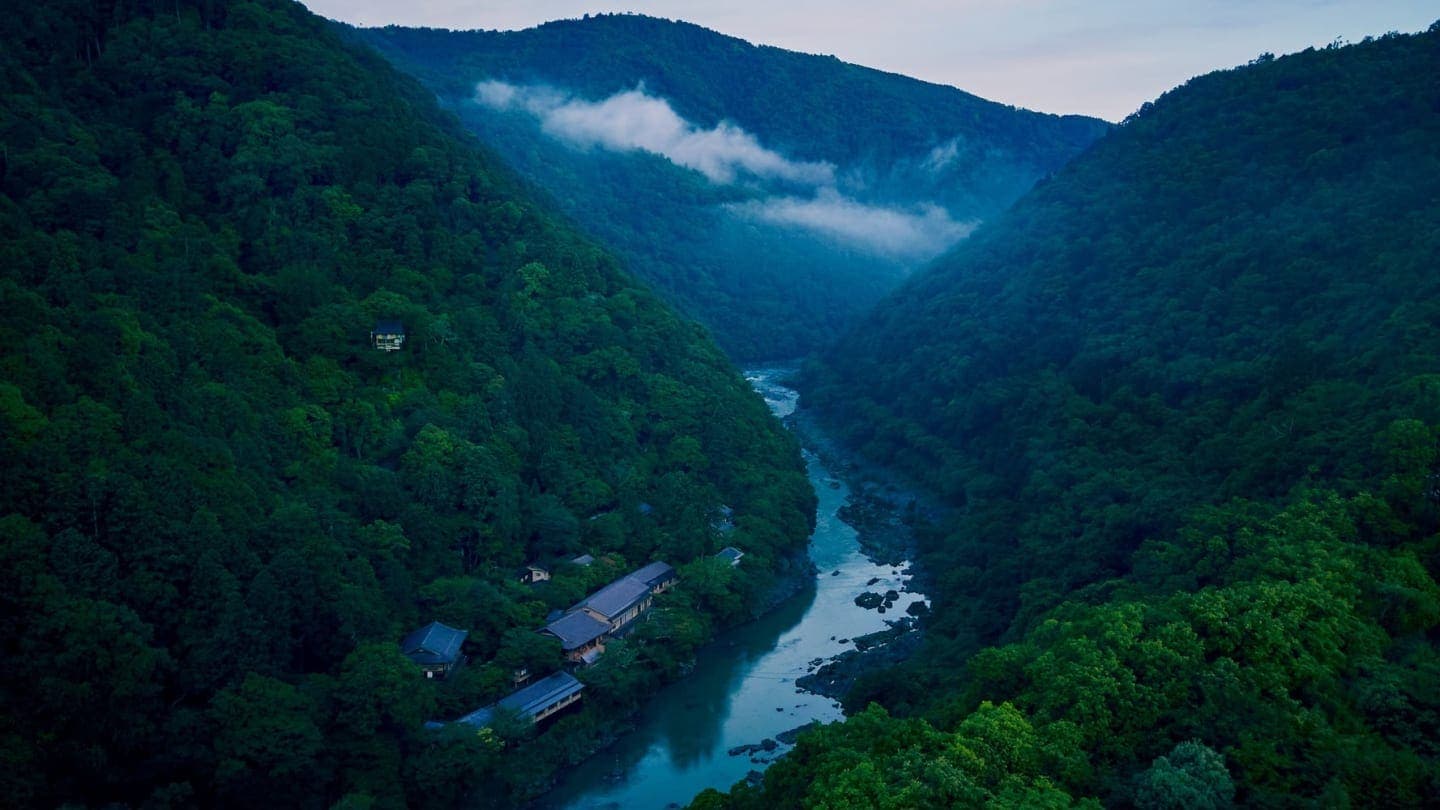
HOSHINOYA Kyoto
A river-accessed ryokan in Arashiyama where every room looks onto the Ōi River.
kyoto · JP
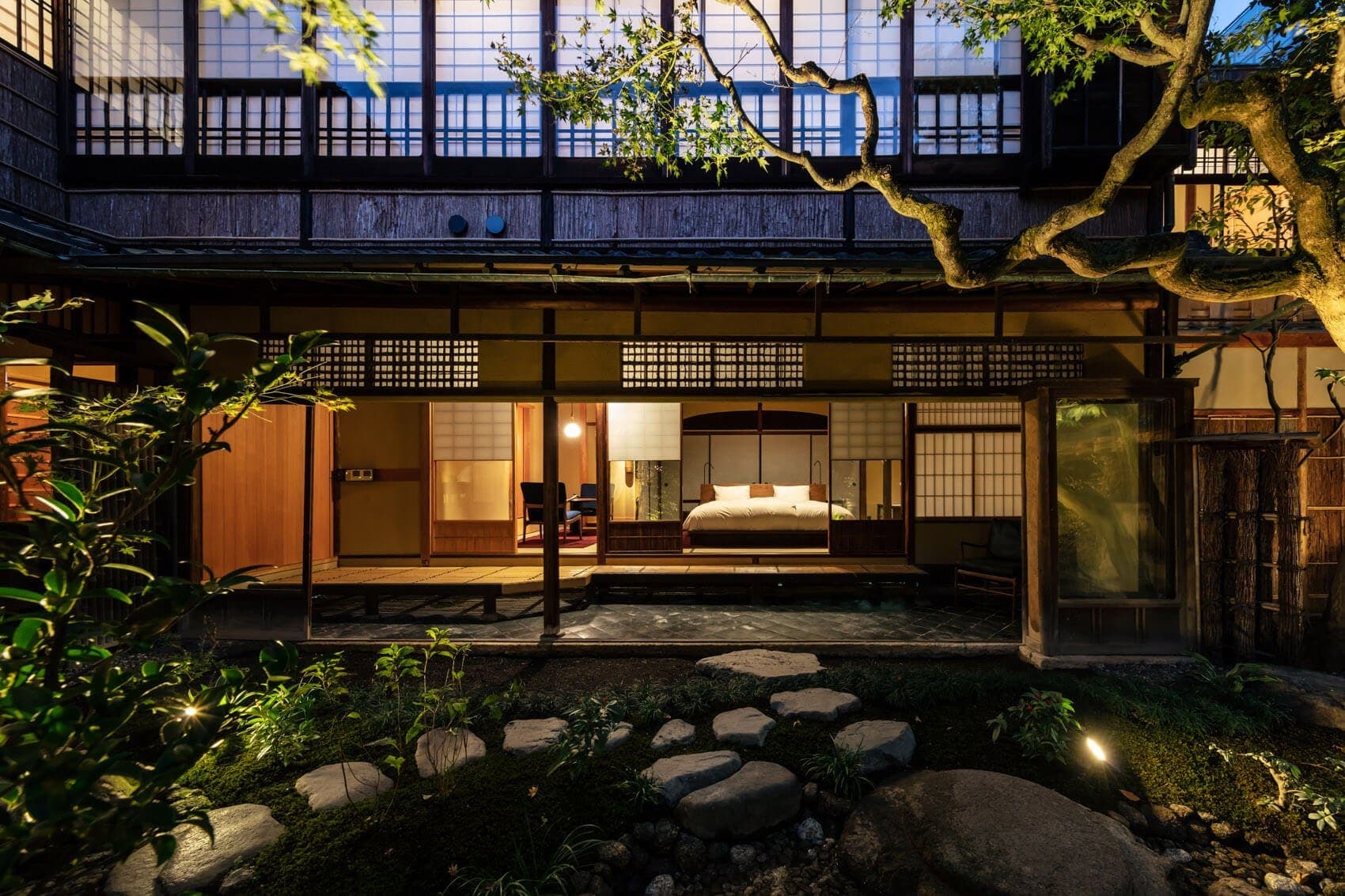
Sowaka
Restored century-old Gion teahouse turned 23-room boutique ryokan, blending sukiya-style architecture with modern comforts and acclaimed dining.
kyoto · JP
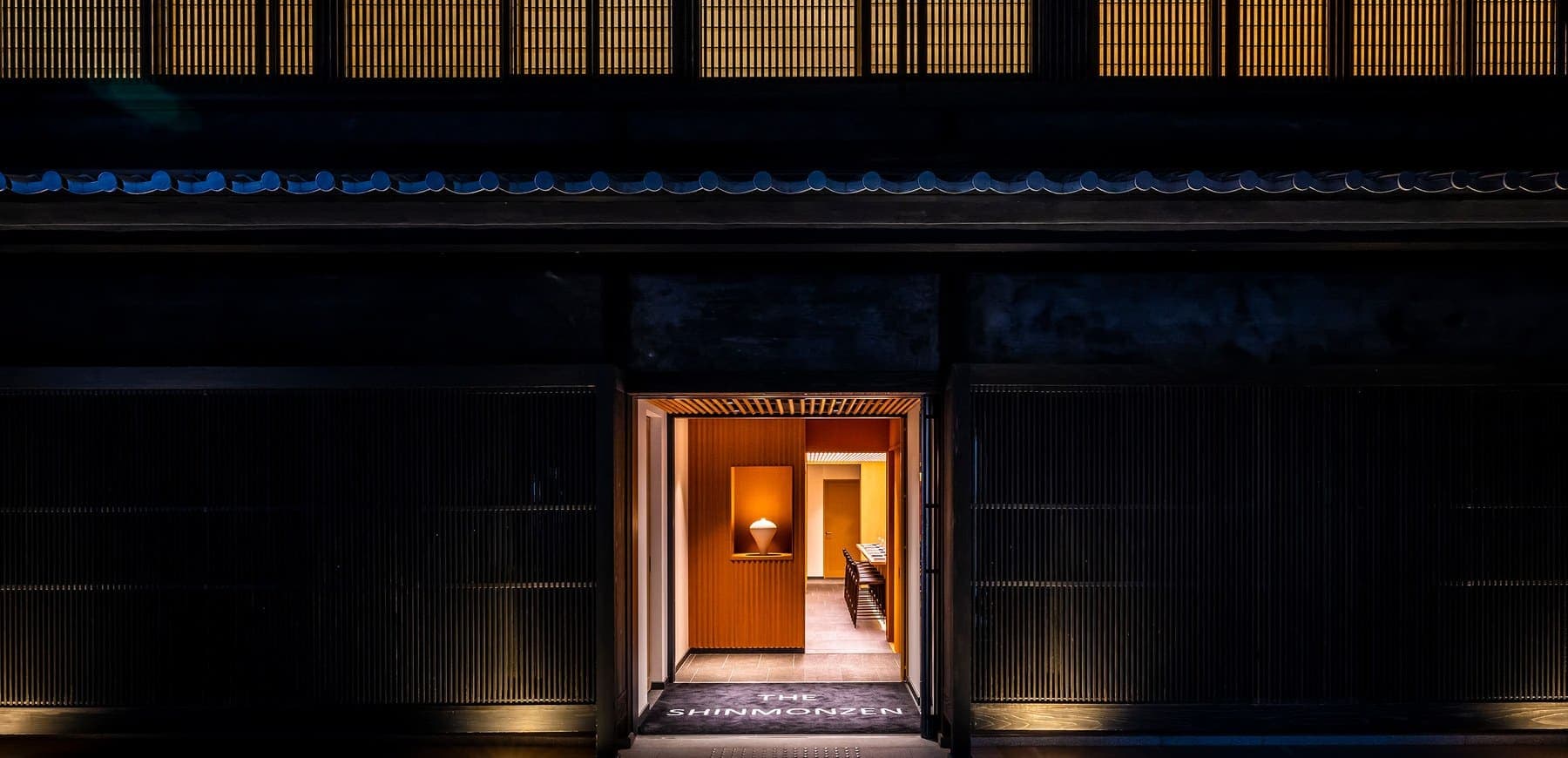
The Shinmonzen
Tadao Ando's nine room ryokan on the Shirakawa stream in Gion, cedar and washi outside, Jean-Georges downstairs.
niseko · JP
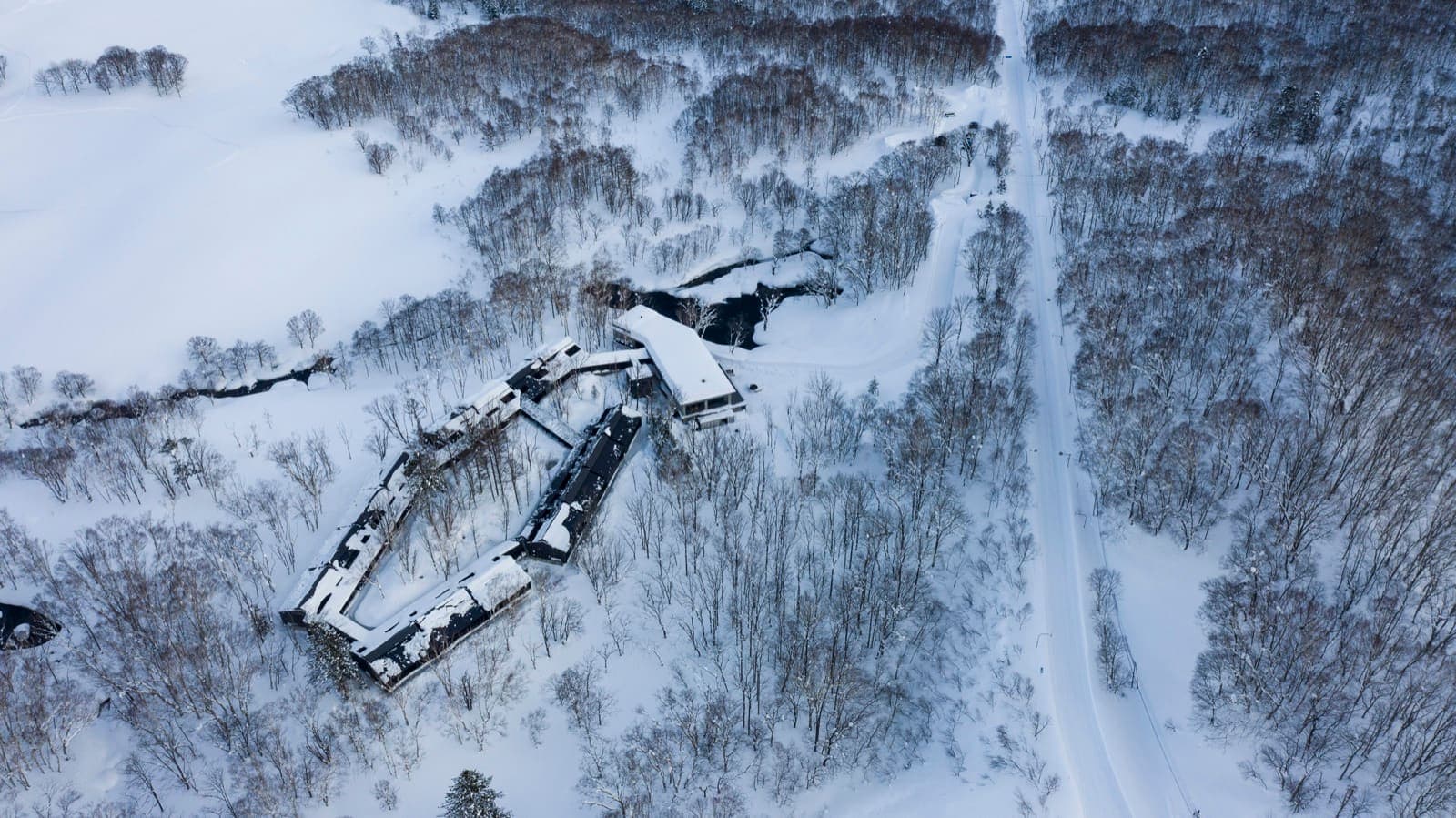
Zaborin
Secluded villa ryokan in a birch forest near Niseko, each villa with private indoor and outdoor onsen fed by natural springs.
What a ryokan actually is
The rate at a ryokan is doing more work than a hotel rate. It almost always covers a multi-course kaiseki dinner built around what is in season locally, breakfast the next morning, and access to the baths, and it is usually quoted per person rather than per room. Comparing it directly with a city hotel’s room-only rate will mislead you in both directions.
The rhythm is different too. You arrive in the afternoon, change into a yukata, bathe before dinner, eat at a set hour, and the room is transformed for sleeping while you are out of it. Asaba has been doing this since the sixteenth century. Gora Kadan occupies a former imperial family retreat in Hakone. Beniya Mukayu looks out over a moss garden on the Japan Sea coast.
Because the meals are seasonal, the stay itself changes through the year in a way a hotel stay does not. Going in a quiet month is not the same room at a lower price, it is a different menu in a different landscape.
When ryokan are cheapest
Japan has two tourist peaks that dominate everything: cherry blossom from late March into April, and autumn leaves through November. Rates at that time are the highest of the year and the famous places book out months ahead. Everything else is, in effect, the off season.
The best-value window is the rainy season, roughly June into mid-July. This sounds like a deterrent and is one of the real secrets of the category: the hydrangeas are out in Hakone, the moss gardens in Kaga are at their deepest green, and the onsen are steaming in cool damp air. Kyoto’s green season through summer is similarly quiet between the waves, with the riverside dining platforms up.
The second window is deep winter, from mid-January once the New Year holiday clears until March. This is snow-country bathing at its best, with crab season on the Japan Sea coast, and it is when a ryokan makes the most obvious sense. One exception: November in Niseko is a dead shoulder when most of the village stays shut and the lifts have barely opened.
The honest answers
what we’d tell a friendWhy are ryokan priced per person rather than per room?
Because the meals are the larger part of what you are buying. Dinner is usually an elaborate multi-course kaiseki, and it scales with the number of guests rather than the number of rooms. It means two people in a room pay roughly double one person, which is the opposite of hotel pricing and worth factoring in before comparing rates.
Do I have to eat dinner at the ryokan?
In practice, yes, and you should want to. Dinner is prepared for a set number of guests at a set hour from ingredients bought that day, so opting out is often not possible and always a waste of the stay. A few modern ryokan offer room-only rates, but the traditional houses are built around the meal.
Can I use the baths if I have tattoos?
It varies, and it is worth settling before you book rather than on arrival. Many traditional houses still restrict tattoos in communal baths. The practical solution at the ryokan we track is a private bath, either booked by the hour or attached to the room itself, which several of them offer as standard.
Is the rainy season really a good time to go?
For a ryokan, unusually so. You are spending most of your time inside the house, in the bath or at the table, and rain on a moss garden or steam rising off an outdoor bath in cool air is the point rather than the problem. It is a poor month for a city sightseeing trip and an excellent one for this.
Every rate on this page is tracked nightly. How we track rates.